Long-Term Food Storage Guide: Build a Reliable Emergency Food Supply
Long-term food storage helps families prepare for emergencies, supply chain disruptions, natural disasters, and self-reliance goals. By storing shelf-stable foods, rotating supplies regularly, and following proper storage practices, you can build a dependable emergency food reserve that supports your household for weeks, months, or even years.
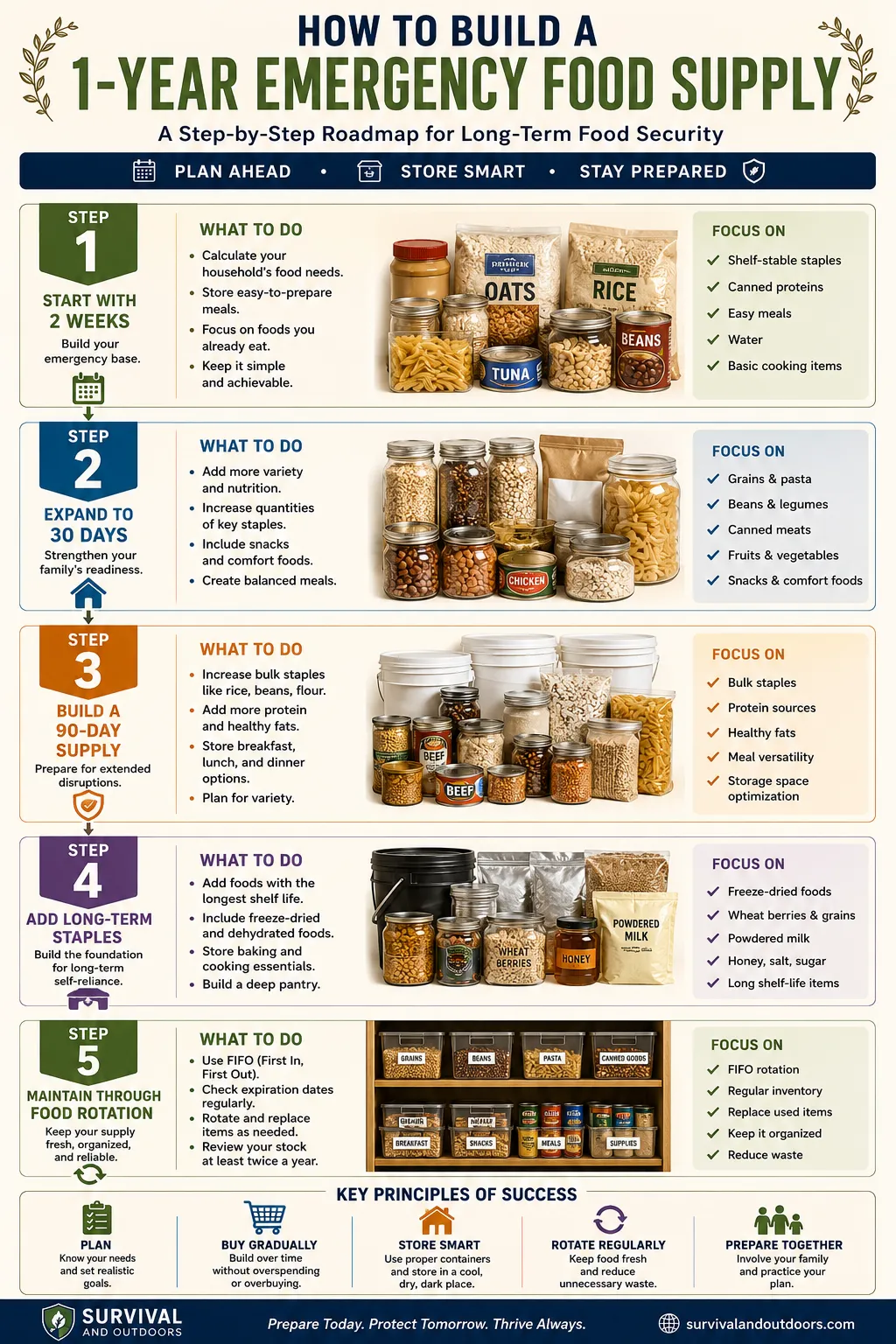
Click the Infographic below to enlarge
What Is Long-Term Food Storage?
Long-term food storage is the practice of storing food for extended periods while maintaining safety, nutritional value, and usability.
Unlike a typical pantry, a long-term food storage system is designed to provide food during:
- Power outages
- Severe weather events
- Supply chain disruptions
- Economic uncertainty
- Emergency evacuations
- Long-term preparedness scenarios
The goal is not simply storing more food, but storing the right foods in the right conditions.
How Much Food Should You Store?
The amount of food needed depends on:
- Household size
- Daily calorie requirements
- Activity levels
- Storage goals
- Duration of preparedness
Many preparedness-minded families start with:
- 2 Weeks
- 30 Days
- 90 Days
- 6 Months
- 1 Year
Calculate Your Food Storage Needs
Use our Food Storage Calculator to estimate:
- Daily calorie requirements
- Total food quantities
- Storage durations
- Household preparedness goals
Use the calculator here —> Food Storage Calculator for Emergency Preparedness.
Â
Best Foods for Long-Term Storage
The best long-term food storage plans focus on foods that offer a combination of nutrition, shelf life, affordability, and versatility.
Recommended staples include:
Grains and Carbohydrates
- Rice
- Oats
- Pasta
- Wheat berries
- Flour
- Cornmeal
Protein Sources
- Canned meats
- Tuna
- Chicken
- Beans
- Lentils
- Freeze-dried meats
Fruits and Vegetables
- Freeze-dried fruits
- Freeze-dried vegetables
- Canned fruits
- Canned vegetables
Fats and Cooking Essentials
- Olive oil
- Coconut oil
- Peanut butter
- Salt
- Honey
- Sugar
A balanced food reserve should include carbohydrates, proteins, fats, vitamins, and comfort foods.
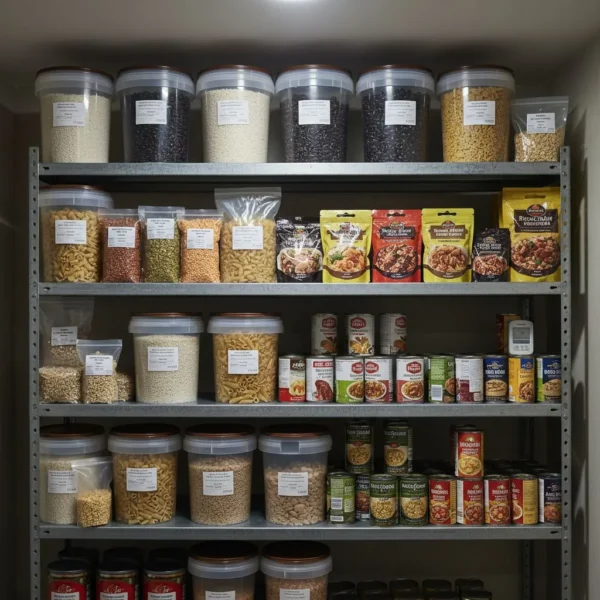
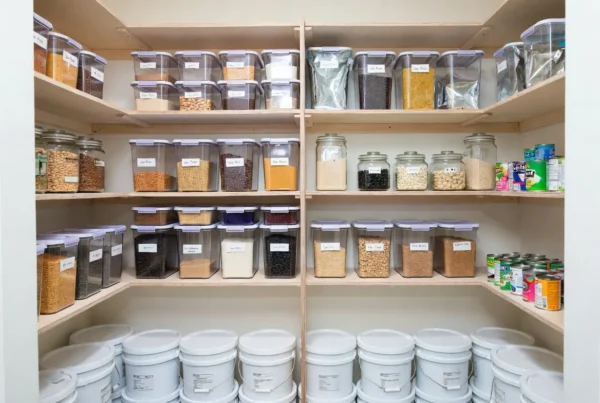
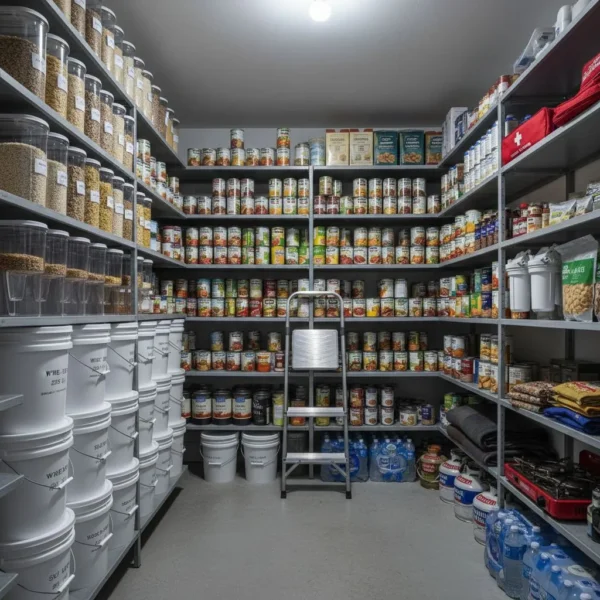
Choosing the Right Storage Containers
Proper storage is critical to maximizing shelf life.
Popular options include:
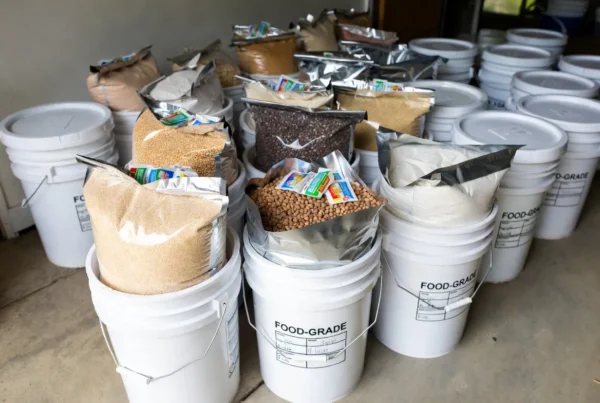
- Food-grade buckets
- Mylar bags
- Oxygen absorbers
- Glass jars
- Vacuum-sealed containers
Combining Mylar bags with oxygen absorbers inside food-grade buckets is one of the most effective methods for long-term dry food storage.
Ideal Food Storage Conditions
Food lasts longest when stored in:
- Cool temperatures
- Dry environments
- Dark locations
- Pest-resistant containers
Avoid:
- Direct sunlight
- High humidity
- Temperature fluctuations
A basement, interior closet, or climate-controlled storage area often works well.
Food Rotation and Shelf-Life Management
Even long-lasting foods should be rotated regularly.
The FIFO method (First In, First Out) helps ensure older supplies are used before newer purchases.
Food rotation helps:
- Reduce waste
- Maintain freshness
- Improve organization
- Lower replacement costs
Emergency Food Storage vs Freeze-Dried Foods
Many preparedness plans use a combination of traditional pantry foods and specialized emergency foods.
Traditional Foods:
- Lower cost
- Familiar ingredients
- Easier integration into daily meals
Freeze-Dried Foods:
- Extremely long shelf life
- Lightweight storage
- Excellent emergency backup option
Common Long-Term Food Storage Mistakes
Avoid these common errors:
- Storing foods your family does not eat
- Ignoring food rotation
- Failing to label containers
- Overlooking protein sources
- Storing food in hot environments
- Purchasing too much too quickly
Preparedness works best when built gradually.
Building Your Food Storage Plan
Start with a realistic goal.
Recommended progression:
- Build a 2-week supply
- Expand to 30 days
- Grow to 90 days
- Add long-term staples
- Maintain a rotation schedule
Preparedness is a long-term process rather than a one-time project.
Related Preparedness Resources
Continue your preparedness planning:
- Food Storage Guide
- Food Storage Calculator
- Food Rotation Guide
- Emergency Survival Food
- Canned Meats
Frequently Asked Questions
A: Rice, beans, wheat berries, freeze-dried foods, honey, salt, and properly stored grains can last many years when stored correctly.
A: Many canned foods remain safe for years beyond their printed dates when stored in cool, dry conditions.
A: Food-grade buckets with Mylar bags and oxygen absorbers are among the most popular long-term storage solutions.
A: This depends on household size and preparedness goals. Many families begin with a two-week reserve and expand over time.
A: Freeze-dried foods can be an excellent addition to a preparedness plan because of their long shelf life and compact storage requirements.
A: Review and rotate supplies at least once or twice per year to maintain freshness and organization.