Emergency Survival Food
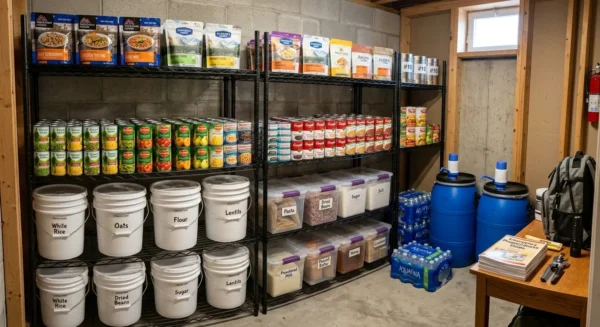
Emergency survival food provides a dependable source of nutrition during natural disasters, power outages, supply chain disruptions, and other emergencies. The most effective preparedness plans combine freeze-dried meals, canned foods, and pantry staples to create a balanced food reserve that meets your family's needs for both short-term and long-term emergencies.
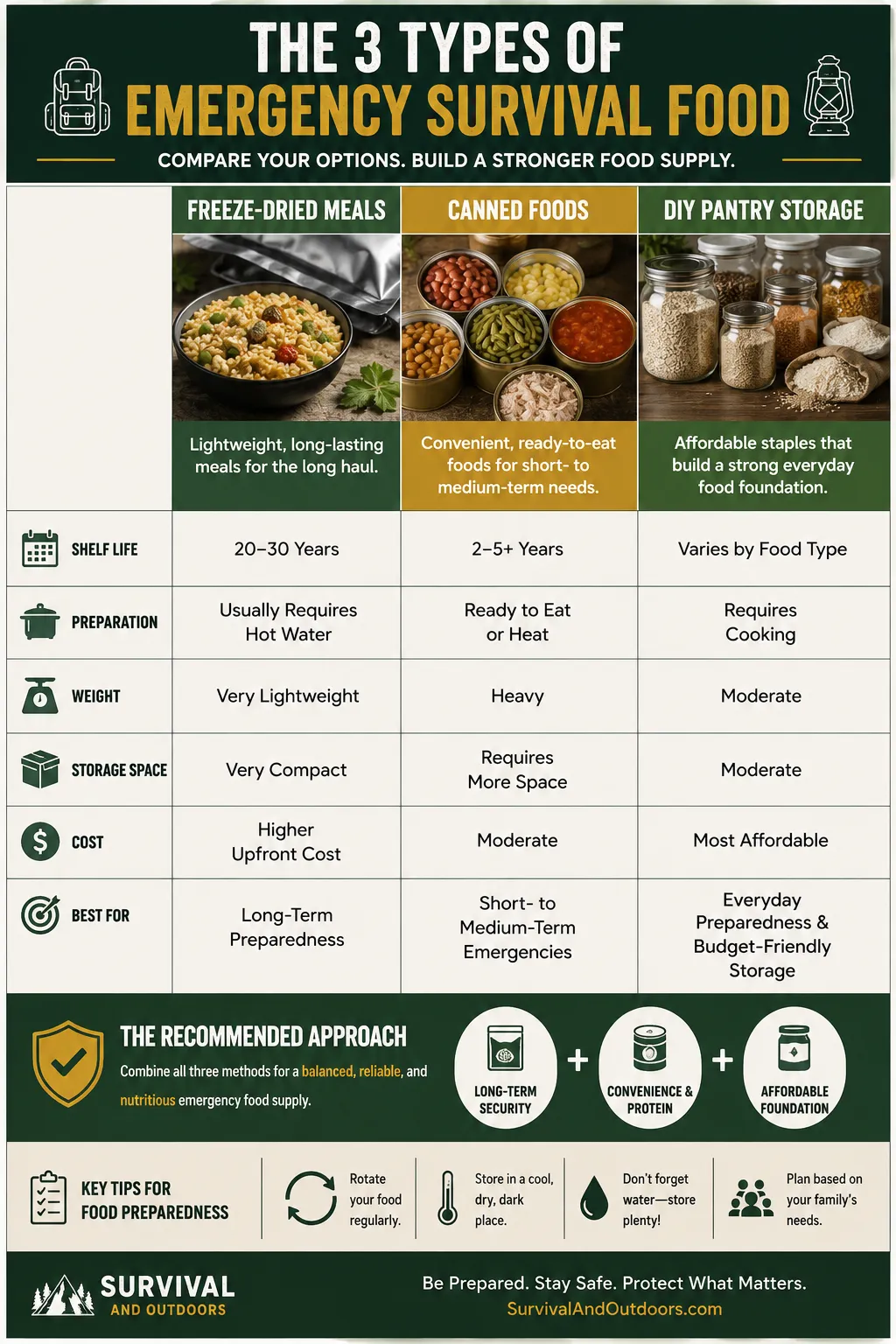
Choosing the right emergency food is easier when you understand the strengths of each storage method. The infographic below compares freeze-dried meals, canned foods, and DIY pantry storage to help you build a balanced preparedness plan.
Click the Infographic below to enlarge
What Is Emergency Survival Food?
Emergency survival food refers to shelf-stable foods stored to provide reliable nutrition during emergencies when grocery stores, supply chains, or utilities may be unavailable.
Unlike everyday groceries, emergency food is selected for its long shelf life, nutritional value, ease of storage, and reliability.
Whether you’re preparing for severe weather, extended power outages, wildfires, hurricanes, economic disruptions, or long-term emergencies, having an emergency food supply can significantly improve your family’s resilience.
The best preparedness plans don’t rely on a single type of food. Instead, they combine several food storage strategies to create a balanced and flexible emergency pantry.
Why Every Emergency Plan Needs Survival Food
Food is one of the most important components of emergency preparedness.
Without reliable access to nutritious food, even short-term emergencies can quickly become stressful.
A well-planned emergency food supply helps you:
• Reduce dependence on grocery stores
• Prepare for supply chain disruptions
• Protect your family during disasters
• Reduce panic buying
• Build long-term self-reliance
Rather than purchasing large quantities all at once, many preparedness experts recommend building your food reserve gradually over time.
The Three Types of Emergency Survival Food
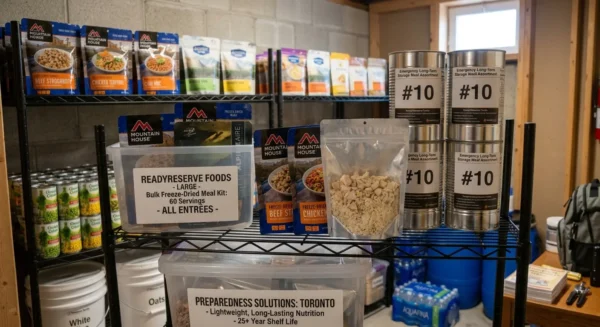
No single food source is perfect.
The strongest emergency food plans combine three categories.
Freeze-Dried Meals
Freeze-dried meals are designed specifically for emergency preparedness.
Advantages include:
• Shelf life of up to 25–30 years
• Lightweight storage
• Excellent nutritional retention
• Minimal storage space
• Easy meal planning
Most freeze-dried meals only require hot water for preparation, making them ideal during extended emergencies.
These products are excellent for long-term preparedness and are a popular choice for emergency food kits.
(Place your My Patriot Supply affiliate recommendation naturally after this section.)
Example recommendation:
“For families building a long-term emergency food reserve, professionally packaged freeze-dried meal kits can provide convenience, long shelf life, and balanced nutrition. Explore our recommended ➡ emergency food kits here.
Canned Foods
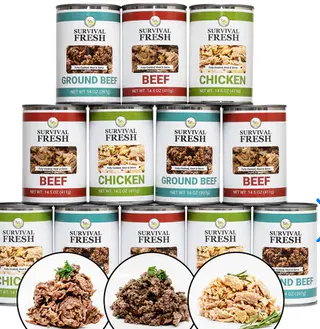
Canned foods remain one of the most practical emergency food options.
Benefits include:
• Ready to eat
• Affordable
• Widely available
• Excellent source of protein
• No cooking required in many cases
Canned vegetables, fruits, soups, beans, and meats provide valuable nutrition during power outages and short-term emergencies.
Protein-rich canned meats are especially useful because they require little preparation while supplying essential nutrients.
➡ Read our Complete Guide to Canned Meats
DIY Pantry Storage
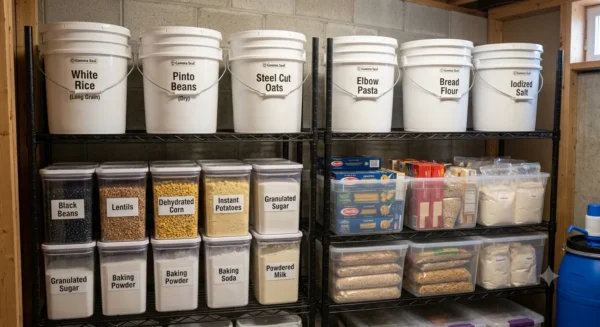
Building your own emergency pantry is one of the most affordable preparedness strategies.
Common pantry staples include:
• Rice
• Beans
• Pasta
• Oats
• Flour
• Sugar
• Salt
• Cooking oils
• Peanut butter
• Lentils
These everyday foods form the foundation of many long-term preparedness plans.
A well-stocked pantry also allows your family to continue eating familiar meals during emergencies.
Comparison: Which Emergency Food Is Best?
| Feature | Freeze-Dried Meals | Canned Foods | DIY Pantry Storage |
|---|---|---|---|
| Shelf Life | 20–30 Years | 2–5+ Years | Varies by Food Type |
| Preparation | Usually Requires Hot Water | Ready to Eat or Heat | Requires Cooking |
| Weight | Very Lightweight | Heavy | Moderate |
| Storage Space | Very Compact | Requires More Space | Moderate |
| Cost | Higher Upfront Cost | Moderate | Most Affordable |
| Best For | Long-Term Preparedness | Short- to Medium-Term Emergencies | Everyday Preparedness & Budget-Friendly Storage |
Our Recommendation: The most effective emergency food storage plan combines all three approaches. Freeze-dried meals provide exceptional long-term security, canned foods offer convenient ready-to-eat nutrition, and DIY pantry staples create an affordable foundation for everyday preparedness. Together, they create a balanced and resilient emergency food supply.
How Much Emergency Survival Food Do You Need?
The amount of food required depends on:
• Household size
• Daily calorie requirements
• Age
• Activity level
• Preparedness goals
Many families begin with:
• Two-week supply
• One-month supply
• Three-month reserve
• Six-month reserve
• One-year preparedness plan
Instead of guessing, use our Food Storage Calculator to estimate exactly how much food your household may need based on your family size and preparedness goals.
Related Guides
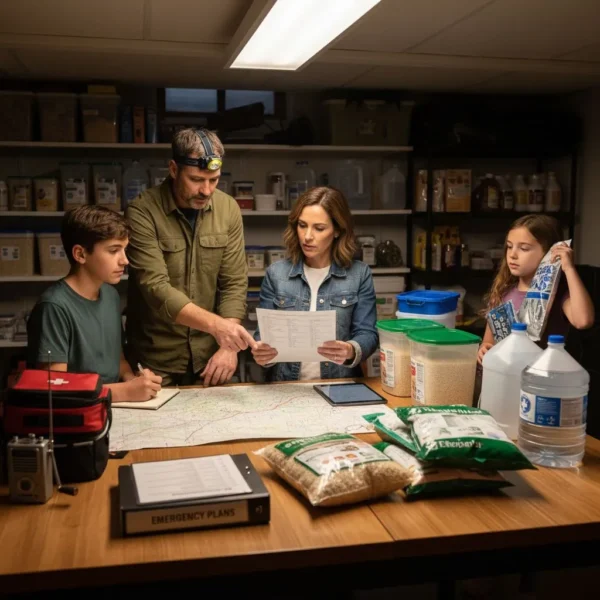
Frequently Asked Questions
Explore frequently Asked Questions about Emergency Food.
A: Emergency survival food consists of shelf-stable foods stored for use during disasters, power outages, supply chain disruptions, or other emergencies. It typically includes freeze-dried meals, canned foods, and pantry staples that provide reliable nutrition over extended periods.
A: Shelf life depends on the type of food. Freeze-dried meals can last 20–30 years when properly stored, canned foods generally last 2–5 years or longer, and pantry staples such as rice and beans vary depending on storage conditions.
A:
A balanced emergency food supply should contain:
- Protein sources
- Grains
- Fruits
- Vegetables
- Healthy fats
- Cooking essentials
- Drinking water
Including a mix of freeze-dried meals, canned foods, and pantry staples provides the greatest flexibility.
A: Many preparedness experts recommend starting with a two-week food supply before gradually expanding to one month, three months, six months, or even a one-year reserve depending on your preparedness goals.
A: Yes. Canned foods are affordable, widely available, and often ready to eat without cooking. They are an excellent source of protein and calories during short- and medium-term emergencies.
A: Absolutely. Many families begin by gradually purchasing pantry staples and canned foods during regular grocery shopping. Over time, adding freeze-dried foods can provide additional long-term security.
A: The most effective preparedness plans combine three approaches:
- Freeze-dried meals for long-term storage
- Canned foods for convenience and protein
- Pantry staples for affordable everyday preparedness
This balanced approach provides flexibility, nutrition, and resilience.