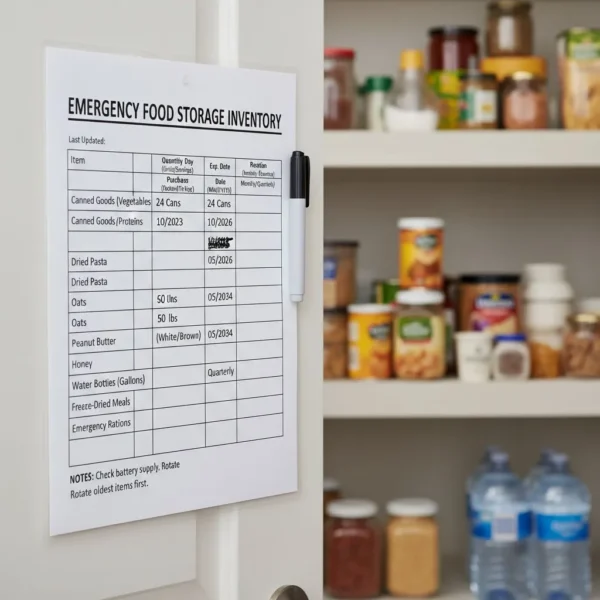
Food rotation is one of the most important aspects of emergency preparedness. A well-organized food storage system helps reduce waste, maintain freshness, and ensure your emergency supplies are available when you need them most. By following a simple food rotation plan, you can keep your preparedness pantry stocked, organized, and ready for both short-term emergencies and long-term disruptions.
The FIFO Food Rotation System
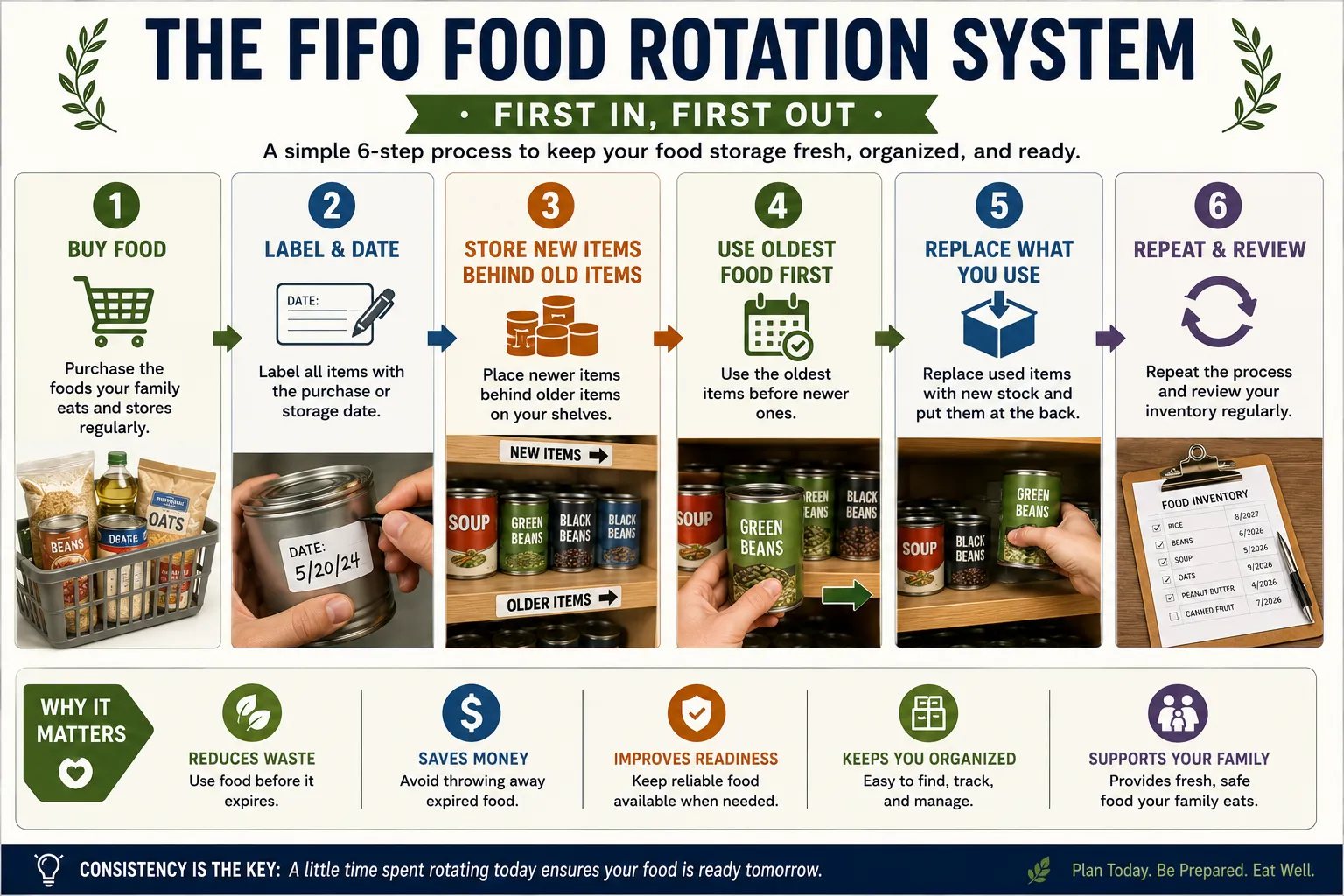
A simple food rotation system helps prevent waste, extends shelf life, and keeps your emergency food supplies ready for use. The infographic below illustrates the six essential steps for maintaining an organized and dependable emergency pantry.
Click Infograpic below to enlarge
The FIFO (First In, First Out) food rotation system helps keep emergency food storage fresh, organized, and ready by using older supplies first and replacing them with new stock.
What Is Food Rotation?
Food rotation is the process of regularly using and replacing stored food to maintain freshness and maximize shelf life.
Many preparedness plans fail because food is stored and forgotten. Over time, expiration dates pass, packaging deteriorates, and valuable supplies go to waste.
A proper food rotation system helps:
Reduce food waste
Maintain freshness
Save money
Improve organization
Ensure emergency readiness
The goal is simple: use older food first and replace it with newer supplies.
Why Food Rotation Matters
Emergency food storage is only valuable if the food remains usable.
Without a rotation system, common problems include:
Expired foods
Duplicate purchases
Forgotten supplies
Wasted money
Pantry clutter
Food rotation turns your emergency storage into a living system that supports both daily life and preparedness goals.
Understanding the FIFO Method
FIFO stands for:
First In, First Out
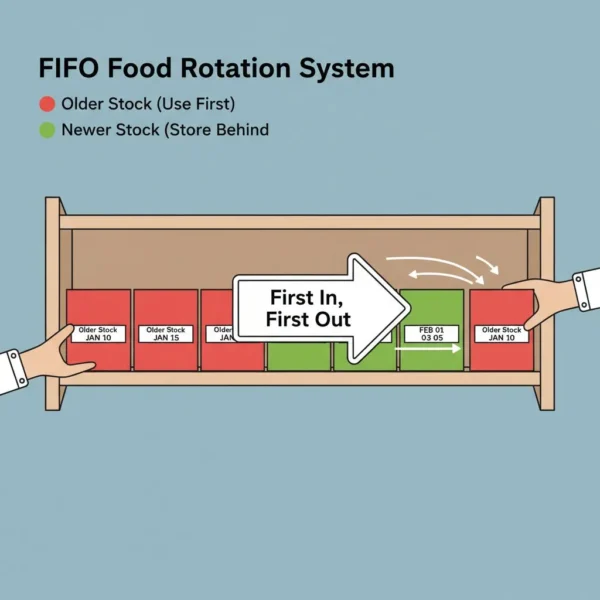
The FIFO method means that the oldest food is used before newer purchases.
For example:
Purchase canned vegetables.
Place new cans behind older cans.
Use the oldest cans first.
Replace consumed items with fresh stock.
This simple system is widely used in restaurants, warehouses, and emergency preparedness programs.
Benefits of FIFO
Prevents expiration
Improves inventory management
Simplifies organization
Reduces waste
Supports long-term preparedness
How to Organize Your Food Storage for Rotation
An organized storage system makes food rotation easy.
Label Everything
Purchase date
Storage date
Expiration date
Clear labeling helps you quickly identify which items should be used first.
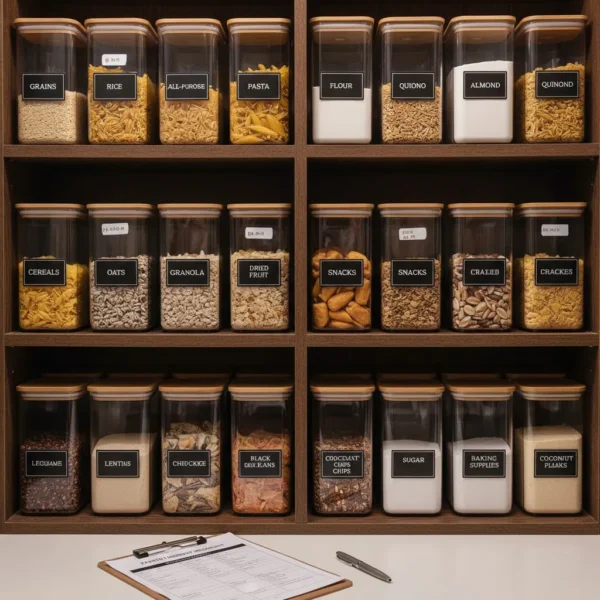
Group Similar Foods Together
Store foods by category:
Canned meats
Vegetables
Fruits
Grains
Freeze-dried foods
Emergency food kits
Grouping items simplifies inventory management.
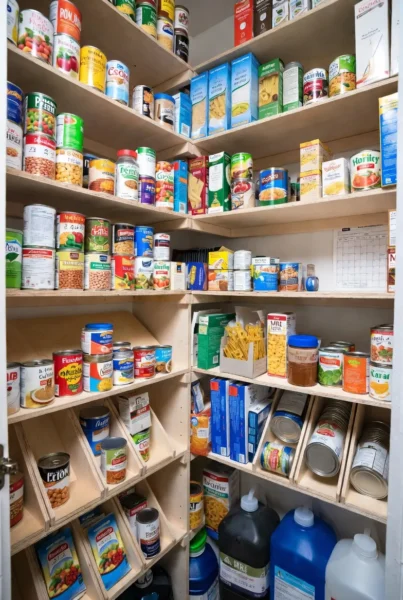
Keep New Stock Behind Older Stock
Always place newer purchases behind older items.
This encourages automatic FIFO rotation without requiring complicated tracking systems.
How Often Should You Rotate Food Storage?
Review your food storage inventory at least:
Every 3 months
Every 6 months
After major purchases
Many preparedness enthusiasts schedule rotation reviews at the start of each season.
Seasonal reviews provide an opportunity to:
Check expiration dates
Replace damaged packaging
Update inventory lists
Adjust preparedness goals
Foods That Require Regular Rotation
Certain foods have shorter shelf lives and should be monitored more frequently.
Higher Rotation Foods
Cooking oils
Peanut butter
Flour
Whole wheat products
Nuts
Dried fruit
Longer Storage Foods
White rice
Dry beans
Salt
Honey
Freeze-dried foods
Properly stored grains
Understanding shelf life helps prioritize rotation efforts.
Building a Food Rotation Schedule
A simple rotation schedule can help maintain long-term readiness.
Monthly
Inspect pantry shelves
Use nearing-expiration items
Update inventory
Quarterly
Review food quantities
Replace consumed supplies
Check storage conditions
Annually
Conduct a complete inventory review
Reorganize storage areas
Update preparedness goals
Consistency is more important than complexity.
Common Food Rotation Mistakes
Avoid these common errors:
Buying more than you can rotate
Ignoring expiration dates
Storing foods your family does not eat
Failing to maintain inventory records
Poor labeling practices
The best food storage system is one that remains practical and manageable.
Food Rotation and Long-Term Preparedness
Food rotation supports every stage of preparedness.
A properly maintained storage system helps ensure:
Reliable emergency food supplies
Reduced waste
Better budgeting
Greater self-reliance
Preparedness is not simply about storing food. It is about maintaining a dependable food system that remains usable over time.