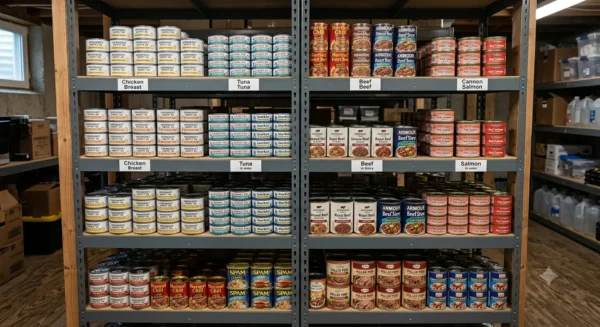
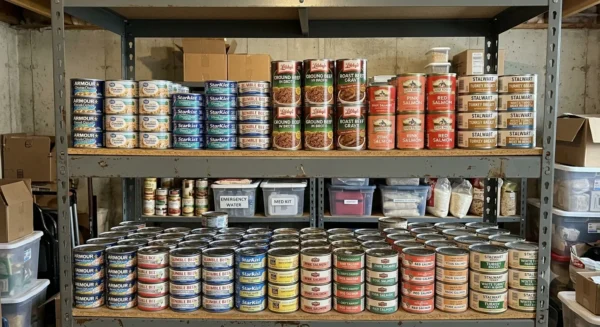
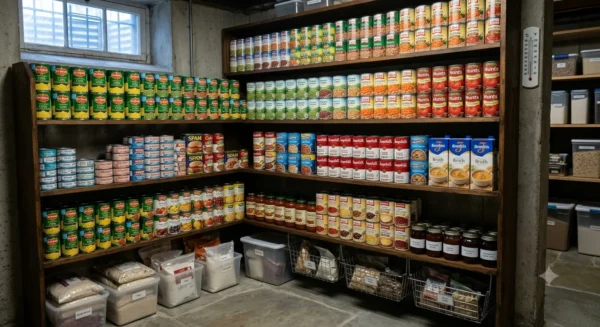
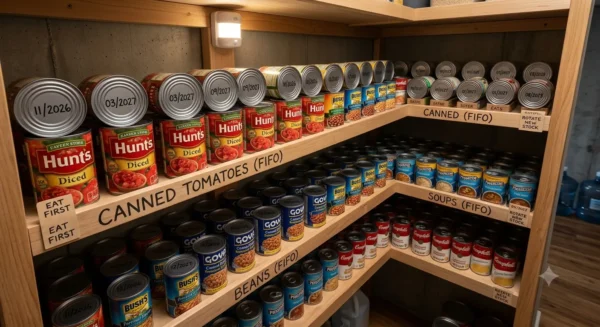
Canned meats are one of the most reliable sources of shelf-stable protein for emergency preparedness. Whether you're building a short-term emergency pantry or a long-term food reserve, canned chicken, tuna, beef, salmon, and other preserved meats provide convenient nutrition with minimal preparation. This guide explains how to choose, store, and rotate canned meats as part of a balanced emergency food supply.
Table of Contents
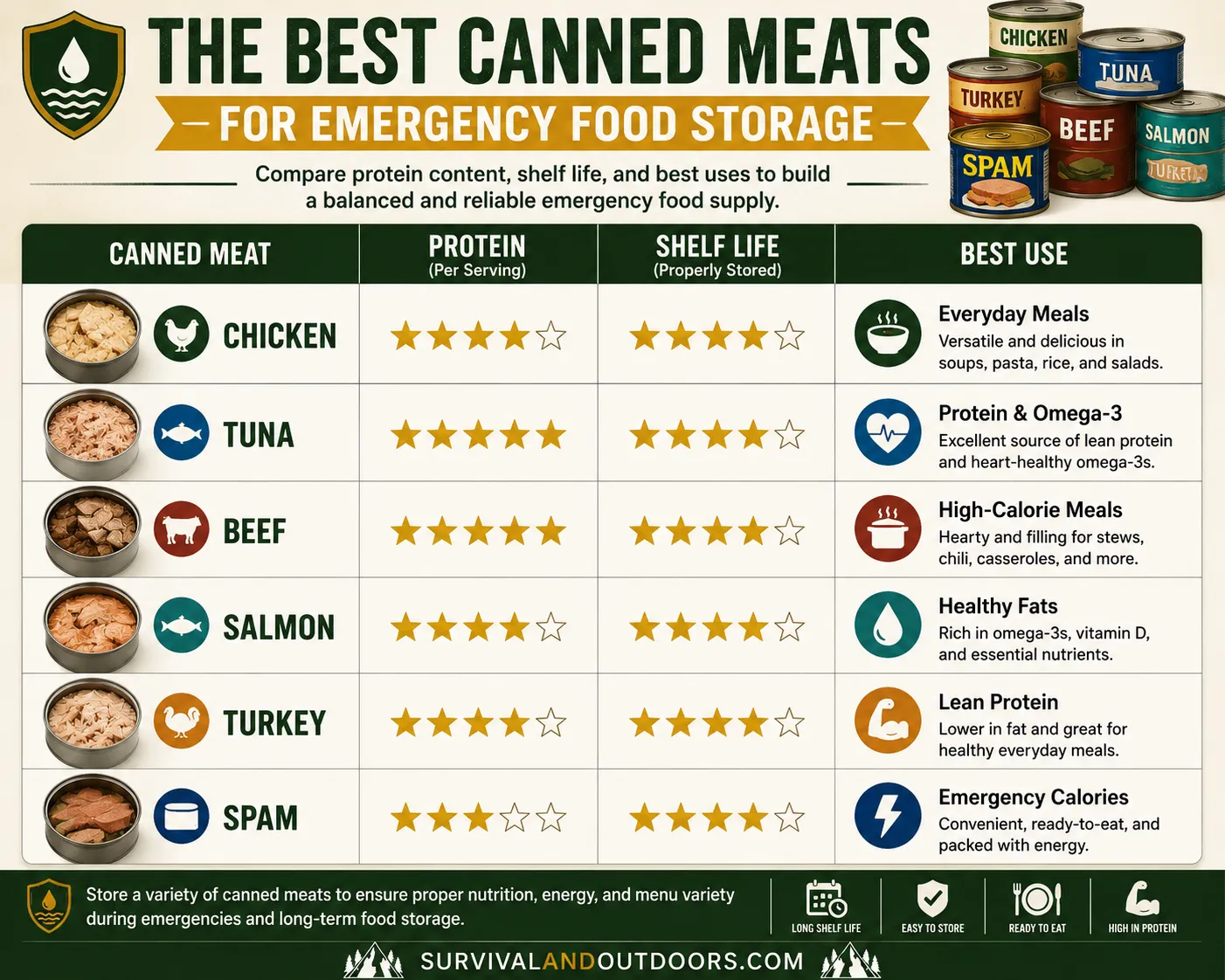
Click on Infographic to enlarge
Compare the best canned meats for emergency food storage based on protein, shelf life, and ideal uses to build a balanced and reliable emergency food supply.
Why Canned Meats Belong in Every Emergency Food Supply
Protein is one of the most important nutrients during emergencies, yet it is often overlooked when building a food storage plan.
While rice, pasta, oats, and beans provide calories, canned meats supply essential protein that helps maintain energy, muscle function, and overall health.
Unlike frozen meat, canned meats require no refrigeration and many varieties can be eaten directly from the can.
Benefits include:
Excellent source of protein
Long shelf life
Ready to eat
No refrigeration required
Easy to store
Minimal preparation
For these reasons, canned meats remain one of the foundations of emergency preparedness.
According to FEMA emergency preparedness recommendations (https://www.fema.gov/emergency-managers/national-preparedness), households should prepare for disruptions by storing non-perishable food and water. Ready.gov also advises keeping at least a three-day supply of shelf-stable food that requires minimal preparation (https://www.ready.gov/food)
Best Types of Canned Protein options for Preparedness
Different canned meats serve different purposes.
Building variety helps maintain nutrition and prevents menu fatigue during extended emergencies.
Canned Chicken
One of the most versatile emergency foods.
Great for:
Soups
Sandwiches
Pasta
Rice dishes
Salads
Canned Tuna
A classic preparedness staple.
Advantages:
High protein
Omega-3 fatty acids
Affordable
Long shelf life
Canned Beef
Ideal for:
Stews
Chili
Emergency meals
Canned Salmon
Excellent source of:
Protein
Healthy fats
Omega-3s
Vitamin D
Canned Turkey
Lean protein option that stores well and works in many recipes.
Spam and Luncheon Meats
Popular because they:
Last several years
Require no cooking
Are calorie dense
Travel well
Moderation is recommended due to sodium content.
How Long Do Canned Meats Last?
Shelf life depends on:
Manufacturer
Storage conditions
Packaging integrity
Generally:
Commercial canned meats: 2–5 years or longer
Freeze-dried meats: Up to 25–30 years (when properly packaged)
Store cans in:
Cool locations
Dry environments
Away from direct sunlight
Stable temperatures
Avoid storing cans that are:
Rusted
Leaking
Swollen
Deeply dented
The USDA Food Safety and Inspection Service (https://www.fsis.usda.gov/food-safety) notes that canned foods can remain safe for extended periods if the packaging is intact and stored in a cool, dry environment. However, regular inspection and rotation are recommended to ensure optimal quality.
Nutrition Comparison of Popular Canned Meats
Canned Meat
Protein Content
Best For
Chicken
Lean Protein
Everyday meals, salads, sandwiches
Tuna
High Protein
Protein, Omega-3s, quick meals
Beef
High Protein
High-calorie meals, stews, chili
Salmon
High Protein
Healthy fats, Omega-3s, balanced nutrition
Turkey
Lean Protein
Low-fat meals and healthy meal prep
Spam® / Luncheon Meat
High Calories & Protein
Emergency energy and convenient ready-to-eat meals
Key Takeaway: A well-rounded emergency food supply should include a variety of canned meats. Combining lean proteins such as chicken and turkey with nutrient-rich options like tuna and salmon, alongside higher-calorie choices such as canned beef and Spam®, provides balanced nutrition, meal variety, and dependable protein during emergencies.
According to Harvard Health Publishing (https://www.health.harvard.edu), adequate protein intake is essential for maintaining muscle mass, energy, and overall health, particularly during periods of stress or limited food availability such as emergencies.
How Much Preserved Meats Should You Store?
Protein needs vary depending on:
Family size
Daily calorie requirements
Activity level
Length of emergency
Most preparedness plans recommend storing a variety of protein sources rather than relying on a single type.
A diverse protein supply improves nutrition and resilience during emergencies.
Recommended Canned Meat Products
If you’re looking for shelf-stable protein that’s designed for emergency preparedness, professionally packaged canned meat products can be a convenient addition to your emergency pantry. We recommend selecting products with long shelf lives, durable packaging, and a variety of nutritional options. 👉 Canned Foods
Related Preparedness Resources
Continue building your emergency food storage system:
🥫 Food Storage– Your guide for Long Term Preparedness and long term survival.
A: Chicken, tuna, beef, salmon, turkey, and shelf-stable luncheon meats are among the most popular options because they provide protein, long shelf life, and minimal preparation.